  • INT
  • DE
  • FR
  • IT
  • NL

User account menu

  • Log in
Home
  • The Magazine
    • All Issues
    • Glossary
    • For Authors
    • Magazine Team
  • Blog
    • All Blog Posts
    • For Authors
  • Book Reviews
    • Book Reviews
  • The Foundation
    • What is In-Mind?
    • Credits
  • Donate

Psychology for You!

  • Magazine Issue
    04/2026

    Now is the time – A discussion on current sexual misconduct prevention and provider readiness

    • written by
    • Julia L. Lancaster
    Despite many efforts to prevent sexual misconduct, this unwanted behavior persists in private and public spaces. Given the prevalence of sexual misconduct and the likelihood that mental health care providers will be called upon during their careers to support survivors, how prepared are they?
    read more
    • Log in to post comments

  • Magazine Issue
    04/2026

    Trapped by tranquility: Understanding dependence on benzodiazepines

    • written by
    • Joana Mihani
    Benzodiazepines offer relief from anxiety and insomnia , yet their calming effects can quietly lead to physical and psychological dependence . This piece explores how that reliance develops and why withdrawal requires support and patience. Recovery is possible when guidance, compassion, and gradual healing replace fear.
    read more
    • Log in to post comments

  • Magazine Issue
    03/2026

    How do we interpret social situations marked by ambiguity?

    • written by
    • Lisa Vos,
    • Tom Smeets,
    • Jonas Everaert
    Imagine sending a message to a friend, and hours pass without a reply. Did you do something wrong? Are they upset? Or are they simply busy? Every day, we face moments like these: ambiguous social situations that leave us wondering what others think or feel. How we interpret these moments can shape our emotions, thoughts, social connections, and our own behavior, and can even impact our mental health. In this article, we review recent research from our team that sheds light on how people make sense of such ambiguous social cues, and why some of us tend to interpret them in ways that fuel depression and anxiety . By understanding these distorted interpretation patterns, we can better grasp how mental health disorders develop and persist.
    read more
    • Log in to post comments

  • Magazine Issue
    03/2026

    Children in front of a screen: what is the impact of technology on their development?

    • written by
    • Marica Notte,
    • Daniela Renzi
    The use of technology, particularly digital devices, is having a negative impact on children’s psychological and physical development. This is largely due to two factors : today’s generations are growing up in an increasingly digital environment , and parents often allow extensive or unregulated use. In response, the international medical community has put forward recommendations aimed at regulating device use to minimize both short and long-term consequences.
    read more
    • Log in to post comments

  • Magazine Issue 04/2026

    Now is the time – A discussion on current sexual misconduct prevention and provider readiness

    written by: Julia L. Lancaster
  • Magazine Issue 04/2026

    Trapped by tranquility: Understanding dependence on benzodiazepines

    written by: Joana Mihani
  • Magazine Issue 03/2026

    How do we interpret social situations marked by ambiguity?

    written by: Lisa Vos, Tom Smeets, Jonas Everaert
  • Magazine Issue 03/2026

    Children in front of a screen: what is the impact of technology on their development?

    written by: Marica Notte, Daniela Renzi
  • Magazine Issue 02/2021

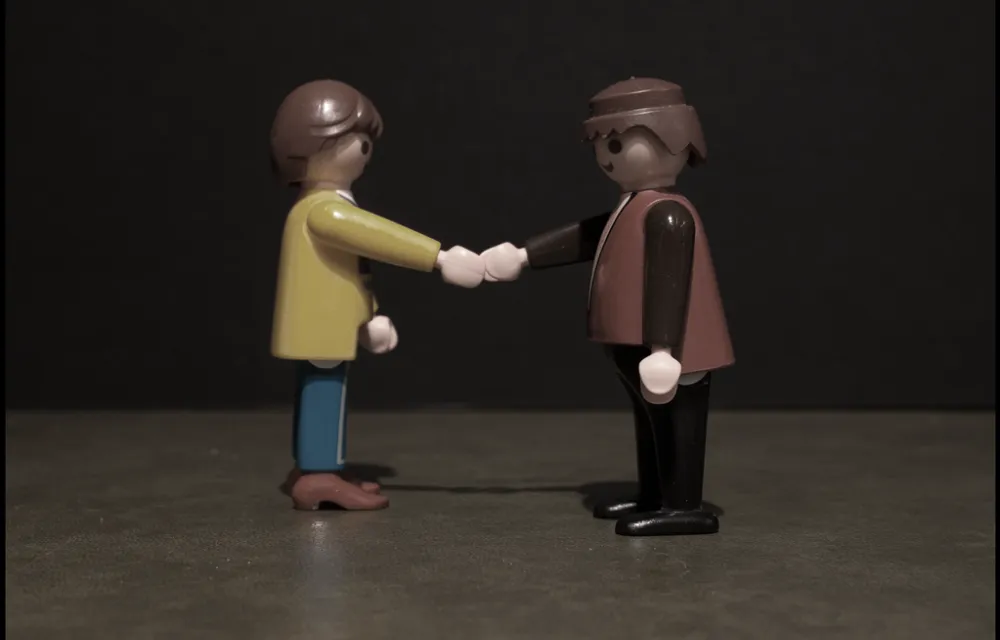
    Nuances of sexual consent: Who? What? When? Where? Why? How?

    written by: Malachi Willis
    People keep talking about sexual consent, but what is it? Let’s dive into some recent research and discover that there is more to sexual consent than you might think. Sexual... more
  • Magazine Issue 11/2020

    How The Good Place illustrates an unorthodox theory in moral psychology

    written by:
    On The Good Place, people are judged on the morality of virtually everything they do. This might seem unfair, but what really counts as moral and non-moral? Evidence from psychology... more
  • Magazine Issue 11/2020

    How "The Good Place" illustrates an unorthodox theory in moral psychology

    written by: Alan Jern
    On The Good Place, people are judged on the morality of virtually everything they do. This might seem unfair, but what really counts as moral and non-moral? Evidence from psychology... more
  • Magazine Issue 01/2020

    Can we believe in our own lies?

    written by: Fabiana Battista, Ivan Mangiulli, Antonietta Curci, Paul Riesthuis, Henry Otgaar
    Can we believe in our own lies? Such a question eventually boils down to the issue of whether lying affects memory . ­­­­­­­This is particularly relevant in the legal arena... more
  • Magazine Issue 01/2020

    Are you Instagram-official? - Love, social media, and their impact on each other

    written by: Lili Fejes-Vékássy, Adrienn Ujhelyi
    Have you ever thought about the criteria used for being recognized as an official couple on social media ? Maybe you felt annoyed when your partner’s new profile picture had... more
  • Magazine Issue 12/2019

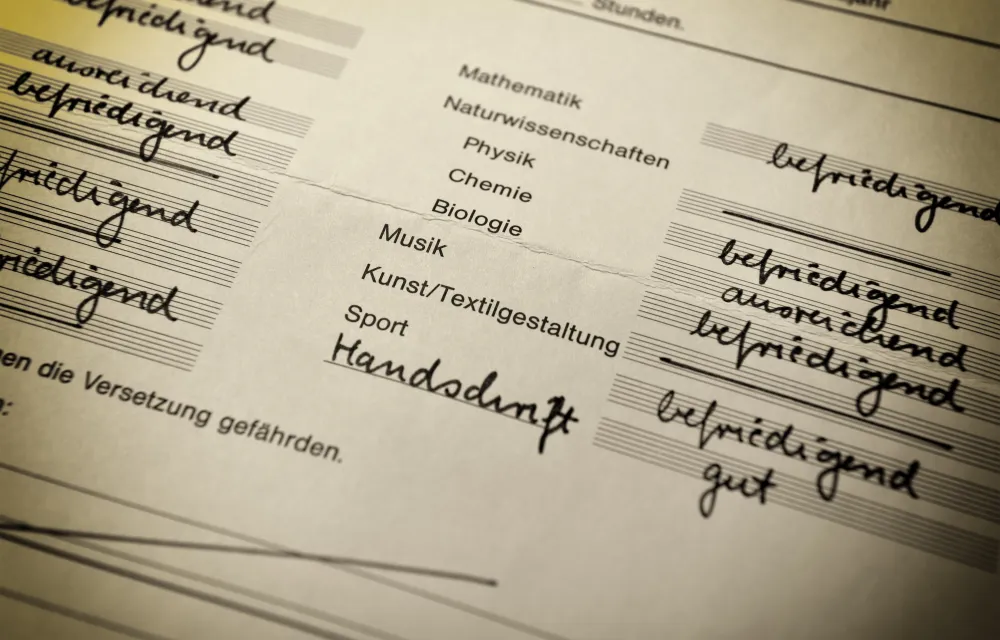
    To which gender’s disadvantage are school grades biased – girls or boys?

    written by: Carolin Schuster
    School grades do not only provide students with feedback on their current performance, they also determine the chances of admission to universities and the success of job applications. The question... more
  • Load More Issues

In-Mind Blog

  • 31.10.2014 | Political Psychology

    Never give up: The persistence of misinformation effects

    written by: Alina Feinholdt
    Politicians, corporations, journalists and even scientists sometimes do it – they tell people things that later on turn out to be incorrect. Yet, getting rid of this so-called misinformation is often easier said than done as false beliefs are particularly sticky. In this blog, I zoom in on the current state of the art in misinformation research. more
  • 26.10.2014 | Race & Ethnicity, Self-Control & Decision-Making

    Does discrimination fit a prototype?

    written by: Aaron Moss
    In this blog post, I discuss what information people use to decide whether a behavior constitutes discrimination. Similar to the way people organize categories and identify objects, I review research showing that people rely on prototypes when deciding what is and is not discrimination. more
  • 18.10.2014 | Happiness & Well-being

    The missing heritability problem

    written by: Marcus Munafo
    In my last post I described the transition from candidate gene studies to genome-wide association studies, and argued that the corresponding change in the methods used, focusing on the whole genome rather than on a handful of genes of presumed biological relevance, has transformed our understanding of the genetic basis of complex traits. In this post I discuss the reasons why, despite this success, we still have not accounted for all the genetic influences we expect to find. more
  • 14.10.2014 | Solid Science

    When science selects for fraud

    written by: Shauna Gordon-McKeon
    Are fraud and other questionable practices in science caused by a few bad apples, or a culture that rewards based on results, not rigor? In this post, I will argue that our scientific environment is selecting for the wrong kind of scientist. more
  • 20.09.2014 | Race & Ethnicity, Culture

    Patriot Acts: Why the USA’s recent decrease in national glorification might be a good sign

    written by: Cathleen Clerkin
    In this blog post, I share a recent report which says that Americans are less fervent about their country now than they’ve been in the recent past. However, I also review some political psychology research on different styles of patriotism which suggests that this particular type of decrease might actually be a good thing for Americans. more
  • 20.09.2014 | Culture, Happiness & Well-being

    The reason that you need to feel good about yourself in order to be happy might not be what you think it is

    written by: Marieke van Egmond
    Do you feel the need to feel good about yourself in order to be happy? Research suggests that if you have a lot of opportunities to make new friends, it is more likely that you will answer this question with a ‘yes’ than when you have more of a set group of people you spend time with. In this blog, I will describe the recent research on the influence of relational mobility and how it relates to the way in which we develop our self-esteem and happiness. more
  • Load more blog posts

Book Reviews

Buried Secrets: Rememberance of Things Past, a Review by Christopher Perez

reviewed by: Christopher Perez

The Coddling of the American Mind, reviewed by Dylan Selterman

reviewed by: Dylan Selterman

My Year of Rest and Relaxation, reviewed by Andrew Archer

reviewed by: Andrew Archer

The Hope Circuit, Reviewed by Joe Smith

reviewed by: Joe Smith

Social Psychology: Revisiting the Classics (2nd Edition)

reviewed by: Richard Skaff

Most Read

  • Magazine Issue 03/2025

    Small screens, big effects: How screen media shapes early childhood

    written by: Dr. Gizem Samdan
  • Magazine Issue 05/2024

    Tilting at windmills: How conspiracy theories hinder climate action and what to do about it

    written by: Kevin Winter, Lotte Pummerer
  • Magazine Issue 06/2024 - Special issue on sport psychology

    Heart rate variability (HRV): How Olympic athletes can use the heart-mind connection to boost their performance

    written by: Sylvain Laborde, Stefan Ackermann, Carla Alfonso, Uirassu Borges, Eva Crone
  • Magazine Issue 09/2024

    How body language helps us understand other people’s emotions

    written by: Britta Krüger, Julia Bachmann, Jörn Munzert
  • Magazine Issue 10/2019

    Going the extra mile at work: Helpful or harmful?

    written by: Marc Cubrich

The Inquisitive Mind Magazine is supported by:

  • DGPs
  • C-SEB

Menu

  • The Magazine
  • Blog
  • Book Reviews
  • The Foundation
  • Donate
  • facebook
  • twitter
  • instagram
  • print

About Us

In-Mind is a voluntary science communication project. We enable scientifically working psychologists to present their research topics in a scientifically sound, understandable and entertaining way for an interested audience: Psychology by scientists for everyone....more

Footer menu

  • Imprint
  • Data Protection
Clear keys input element