  • INT
  • DE
  • FR
  • IT
  • NL

User account menu

  • Log in
Home
  • The Magazine
    • All Issues
    • Glossary
    • For Authors
    • Magazine Staff
  • Blog
    • All Blog Posts
    • For Authors
  • Book Reviews
    • Book Reviews
  • The Foundation
    • What is In-Mind?
    • Credits
  • Donate

Psychology for You!

  • Magazine Issue
    02/2026

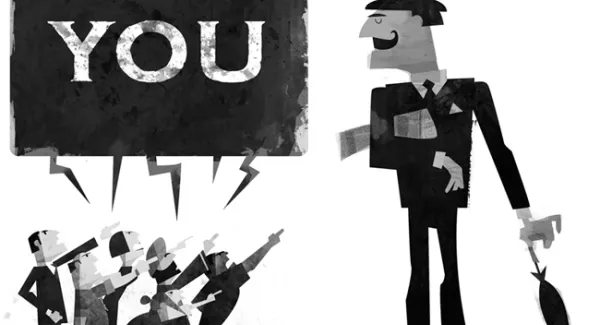
    A spoonful of misinformation helps the medicine go viral. How misinformation spreads and who bears the consequences.

    • written by
    • Lotte Slootmaekers,
    • Sanne Houben,
    • Irena Boskovic
    Back to January 2021: you are at home because of the COVID-19 pandemic and decide to scroll through social media for some much-needed distraction. Within seconds, you come across posts about microchips in vaccines, COVID spreading through 5G networks, and President Trump suggesting that injecting disinfectants could be a cure for COVID-19. Social media has become a hotbed of armchair experts, doom-mongers, and conspiracy theorists. You laugh off the misinformation easily, after all, nobody really believes this... Right?
    read more
    • Log in to post comments
  • Magazine Issue
    02/2026

    A step-by-step guide to writing science communication articles

    • written by
    • Maike Ramrath,
    • Stella Wernicke
    Effective science communication bridges the gap between science and society. This guide outlines practical strategies for turning psychological research into engaging, accessible articles, including topic selection, structuring the article, and responsible presentation of results.
    read more
    • Log in to post comments

  • Magazine Issue
    02/2026

    When loving hurts: The pervasiveness of stigma towards consensual non-monogamy

    • written by
    • Stefano Ciaffoni,
    • Yasin Koc,
    • Silvia Moscatelli
    Consensual non-monogamy is often seen as immoral, childish, or even harmful. This article reviews how stigma towards consensually non-monogamous relationships is widespread and socially shared, shaping judgments and discrimination against those who love outside monogamous norms.
    read more
    • Log in to post comments

  • Magazine Issue
    02/2026

    Scrolling through the past: How digital tools change the way we remember

    • written by
    • Kate Schramm,
    • Fabian Hutmacher
    We are constantly documenting our lives with digital technologies. But how do these tools, from smartphone camera rolls to wearables and social media platforms, change what and how we remember? In this article, we explore the interplay between memories stored in our minds and the available technological devices.
    read more
    • Log in to post comments

  • Magazine Issue 02/2026

    A spoonful of misinformation helps the medicine go viral. How misinformation spreads and who bears the consequences.

    written by: Lotte Slootmaekers, Sanne Houben, Irena Boskovic
  • Magazine Issue 02/2026

    A step-by-step guide to writing science communication articles

    written by: Maike Ramrath, Stella Wernicke
  • Magazine Issue 02/2026

    When loving hurts: The pervasiveness of stigma towards consensual non-monogamy

    written by: Stefano Ciaffoni, Yasin Koc, Silvia Moscatelli
  • Magazine Issue 02/2026

    Scrolling through the past: How digital tools change the way we remember

    written by: Kate Schramm, Fabian Hutmacher
  • Magazine Issue 10/2019

    Going the extra mile at work: Helpful or harmful?

    written by: Marc Cubrich
    Is it helpful or harmful to go the extra mile at work? While generally regarded favorably, organizational researchers are increasingly considering the potential dark side of discretionary work behaviors that... more
  • Magazine Issue 10/2019

    Fair enough? The inequality paradox, inequality awareness, and system justification

    written by: Carmen Cervone, Andrea Scatolon
    Picture society. Some people are rich, some are poor and that’s just the way it is. After all, rich people have worked hard to get where they are, and anyone... more
  • Magazine Issue 04/2019

    Can vacations live up to their reputation?

    written by: Ina-Maria Döring
    Especially in the time before summer, people look forward to the beginning of their summer vacations. On the one hand, holidays are an integral part of life of our society... more
  • Magazine Issue 01/2019

    Sorry, Not Sorry: Apologies and Denials in the #MeToo Movement

    written by: Chris Reinders Folmer
    The #MeToo-movement publicly confronts alleged perpetrators of sexual misconduct with their transgressions. In return, the accused often struggle with the question of how to reply. What can research about trust... more
  • Magazine Issue 01/2019

    From Pervasive Beliefs To Wrongful Convictions

    written by: Enide Maegherman, Robert Horselenberg, Karl Ask, Peter J. Van Koppen
    Popular series like “Making a Murderer” and “The Confession Tapes” have raised public awareness of the possibility of wrongful convictions. Can cognitive psychology resolve why evidence of innocence is overlooked... more
  • Magazine Issue 01/2019

    Refugees wel(l)come: The impact of social support on refugees’ well-being

    written by: Ina-Maria Döring
    To date, the refugee crisis has been a central issue for society and associated with several challenges. This article focuses on the well-being of refugees as a basis for successful... more
  • Load More Issues

In-Mind Blog

  • 18.08.2014 | Meaning Making

    Blame. What is it good for?

    written by: Andrew Monroe
    Humans blame, and perhaps only humans do, but what is blame for? Is blame about meting out retribution and revenge? Or is blame a tool for managing others’ behavior? I... more
  • 28.07.2014 | Violence & Aggression

    Foul-weather friends: Social psychology and school aggression

    written by: Sian Jones
    One classic study showed that when children intervene in bullying, it stopped within 10 seconds in 57% of episodes. This clearly speaks to the vital role bystanders play in helping... more
  • 14.07.2014 | Culture

    Smile! And I tell you where you’re from

    written by: Marieke van Egmond
    Although a popular belief (and a heartwarming children’s song) hold that we all laugh in the same language, recent research has found that people are remarkably adapt at detecting local... more
  • 09.07.2014 | Happiness & Well-being

    Smartphones: A threat to well-being?

    written by: Alina Feinholdt
    Nowadays, smartphones appear to play an inevitable role both in our work and private life. However, when it comes to work-related use, smartphones can hamper recovery and thus, pose a... more
  • 05.07.2014 | Violence & Aggression

    Why Are We Still Spanking Our Kids?

    written by: Kathryn Bartlett Anderson, Donald Lucas
    Although it is counterintuitive, violence in America today is most likely to occur within the home (Rennison, 2003). Might the origin of violence be within the home as well, specifically... more
  • 26.06.2014 | Happiness & Well-being

    From candidate genes to genome-wide association studies

    written by: Marcus Munafo
    In my last post I asked where the genes for psychological traits are, and argued that over the last two decades candidate gene studies have failed to identify genes that... more
  • Load more blog posts

Book Reviews

Buried Secrets: Rememberance of Things Past, a Review by Christopher Perez

reviewed by: Christopher Perez

The Coddling of the American Mind, reviewed by Dylan Selterman

reviewed by: Dylan Selterman

My Year of Rest and Relaxation, reviewed by Andrew Archer

reviewed by: Andrew Archer

The Hope Circuit, Reviewed by Joe Smith

reviewed by: Joe Smith

Social Psychology: Revisiting the Classics (2nd Edition)

reviewed by: Richard Skaff

Most Read

  • Magazine Issue 03/2024

    Context matters: Why women are not worse negotiators than men

    written by: Moritz Burmester, Yannik Escher, Danna Oomen, Hannes Petrowsky
  • Magazine Issue 04/2018

    Fake Posttraumatic Stress Disorder (PTSD) Costs Real Money

    written by: Irena Boskovic, Harald Merckelbach
  • Magazine Issue 01/2015

    Children are poor witnesses. Or are they?

    written by: Nathalie Brackmann, Henry Otgaar, Melanie Sauerland, Harald Merckelbach
  • Magazine Issue 10/2007

    Exposing an Armed Criminal: What Can We Learn from Psychology and the Police?

    written by: Anastassia Blechko
  • Magazine Issue 06/2011

    General action and inaction goals: Definitions & effects

    written by: Melanie B. Tannenbaum, Justin Hepler, Dolores Albarracin

The Inquisitive Mind Magazine is supported by:

  • DGPs
  • C-SEB

Menu

  • The Magazine
  • Blog
  • Book Reviews
  • The Foundation
  • Donate
  • facebook
  • twitter
  • instagram
  • print

About Us

In-Mind is a voluntary science communication project. We enable scientifically working psychologists to present their research topics in a scientifically sound, understandable and entertaining way for an interested audience: Psychology by scientists for everyone....more

Footer menu

  • Imprint
  • Data Protection
Clear keys input element