  • INT
  • DE
  • FR
  • IT
  • NL

User account menu

  • Log in
Home
  • The Magazine
    • All Issues
    • Glossary
    • For Authors
    • Magazine Team
  • Blog
    • All Blog Posts
    • For Authors
  • Book Reviews
    • Book Reviews
  • The Foundation
    • What is In-Mind?
    • Credits
  • Donate

Psychology for You!

  • Magazine Issue
    04/2026

    Now is the time – A discussion on current sexual misconduct prevention and provider readiness

    • written by
    • Julia L. Lancaster
    Despite many efforts to prevent sexual misconduct, this unwanted behavior persists in private and public spaces. Given the prevalence of sexual misconduct and the likelihood that mental health care providers will be called upon during their careers to support survivors, how prepared are they?
    read more
    • Log in to post comments

  • Magazine Issue
    04/2026

    Trapped by tranquility: Understanding dependence on benzodiazepines

    • written by
    • Joana Mihani
    Benzodiazepines offer relief from anxiety and insomnia , yet their calming effects can quietly lead to physical and psychological dependence . This piece explores how that reliance develops and why withdrawal requires support and patience. Recovery is possible when guidance, compassion, and gradual healing replace fear.
    read more
    • Log in to post comments
  • Magazine Issue
    03/2026

    How do we interpret social situations marked by ambiguity?

    • written by
    • Lisa Vos,
    • Tom Smeets,
    • Jonas Everaert
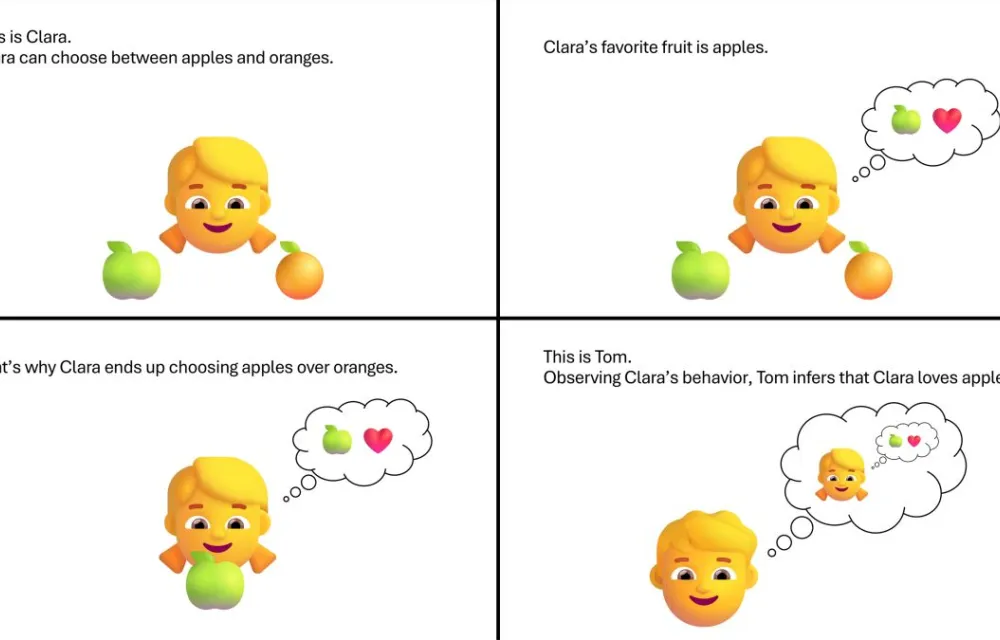
    Imagine sending a message to a friend, and hours pass without a reply. Did you do something wrong? Are they upset? Or are they simply busy? Every day, we face moments like these: ambiguous social situations that leave us wondering what others think or feel. How we interpret these moments can shape our emotions, thoughts, social connections, and our own behavior, and can even impact our mental health. In this article, we review recent research from our team that sheds light on how people make sense of such ambiguous social cues, and why some of us tend to interpret them in ways that fuel depression and anxiety . By understanding these distorted interpretation patterns, we can better grasp how mental health disorders develop and persist.
    read more
    • Log in to post comments

  • Magazine Issue
    03/2026

    Children in front of a screen: what is the impact of technology on their development?

    • written by
    • Marica Notte,
    • Daniela Renzi
    The use of technology, particularly digital devices, is having a negative impact on children’s psychological and physical development. This is largely due to two factors : today’s generations are growing up in an increasingly digital environment , and parents often allow extensive or unregulated use. In response, the international medical community has put forward recommendations aimed at regulating device use to minimize both short and long-term consequences.
    read more
    • Log in to post comments

  • Magazine Issue 04/2026

    Now is the time – A discussion on current sexual misconduct prevention and provider readiness

    written by: Julia L. Lancaster
  • Magazine Issue 04/2026

    Trapped by tranquility: Understanding dependence on benzodiazepines

    written by: Joana Mihani
  • Magazine Issue 03/2026

    How do we interpret social situations marked by ambiguity?

    written by: Lisa Vos, Tom Smeets, Jonas Everaert
  • Magazine Issue 03/2026

    Children in front of a screen: what is the impact of technology on their development?

    written by: Marica Notte, Daniela Renzi
  • Magazine Issue 02/2026

    A spoonful of misinformation helps the medicine go viral. How misinformation spreads and who bears the consequences.

    written by: Lotte Slootmaekers, Sanne Houben, Irena Boskovic
    Back to January 2021: you are at home because of the COVID-19 pandemic and decide to scroll through social media for some much-needed distraction. Within seconds, you come across posts... more
  • Magazine Issue 02/2026

    A step-by-step guide to writing science communication articles

    written by: Maike Ramrath, Stella Wernicke
    Effective science communication bridges the gap between science and society. This guide outlines practical strategies for turning psychological research into engaging, accessible articles, including topic selection, structuring the article, and... more
  • Magazine Issue 02/2026

    When loving hurts: The pervasiveness of stigma towards consensual non-monogamy

    written by: Stefano Ciaffoni, Yasin Koc, Silvia Moscatelli
    Consensual non-monogamy is often seen as immoral, childish, or even harmful. This article reviews how stigma towards consensually non-monogamous relationships is widespread and socially shared, shaping judgments and discrimination against... more
  • Magazine Issue 02/2026

    Scrolling through the past: How digital tools change the way we remember

    written by: Kate Schramm, Fabian Hutmacher
    We are constantly documenting our lives with digital technologies. But how do these tools, from smartphone camera rolls to wearables and social media platforms, change what and how we remember... more
  • Magazine Issue 01/2026

    Minority report: Fact or fiction? Can we actually predict violent behavior?

    written by: Petra Habets, Josanne van Dongen
    More than twenty-four years ago, the film Minority Report offered a visionary glimpse into a future of self-driving cars, facial recognition , and the possibility of predicting crimes before they... more
  • Magazine Issue 01/2026

    Between excellence and well-being: The case of academia

    written by: Silvia Filippi, Caterina Suitner
    Loving your work can be both a privilege and a trap. In academia and beyond, passion and flexibility often turn into pressure and overwork. This article examines the hidden costs... more
  • Load More Issues

In-Mind Blog

  • Call for articles on topical issues
    27.04.2026 | Announcements and News

    Call for articles on topical issues

    written by: Stella Wernicke, Jana Dreston
    We are currently looking to publish articles on a series of specific themes that we know people are generally very interested in learning more about. This is an invitation to all those interested in writing an article on any of the themes or specific topics listed below to please submit a short abstract on a future article idea. If your abstract is accepted, we will invite you to submit a full length-article to the magazine, which will then be reviewed. Your abstract should be around 150–250 words long, and we wish to have your abstract before November 3rd. more
  • Negativity Bias: It’s Not All About Evolution!
    04.04.2026 |

    Negativity Bias: It’s Not All About Evolution!

    written by: Lea Sperlich, Tabea Zorn
    Negativity bias refers to the phenomenon that negative information carries more psychological weight than positive information. For instance, the sting of losing $10 is felt more intensely than the joy of gaining $10, and we are quicker to spot a threatening face in a crowd than a friendly one. Surprisingly, however, this effect doesn't seem to show up in evaluative conditioning (which is the change in the liking of a neutral stimulus due to its joint presentation with a positive or negative stimulus )—even when all the typical conditions for it are met. So, why doesn't the bias show up here? We take a closer look at the data to find out. more
  • Call for reviewers (In-Mind Magazine): Support In-Mind as a reviewer: Let’s make psychology accessible to everyone!
    17.03.2026 |

    Call for reviewers (In-Mind Magazine): Support In-Mind as a reviewer: Let’s make psychology accessible to everyone!

    written by: Nathalie Claus, Lorenz Grolig
    What is In-Mind? In-Mind is a volunteer-driven non-profit project dedicated to sharing psychological research. We present psychological research in an engaging, accessible, and scientifically rigorous way – psychology for all. Our journal publishes freely available articles across all areas of... more
  • Join the In-Mind team: Help us make psychology accessible to everyone!
    03.03.2026 |

    Join the In-Mind team: Help us make psychology accessible to everyone!

    written by: Stella Wernicke, Jana Dreston
    What is In-Mind? In-Mind is a volunteer-driven project dedicated to sharing psychological research. We give researchers a platform to present their work in an engaging, accessible, and scientifically rigorous way – psychology by scientists, for everyone. Our journal publishes freely available... more
  • 31.01.2026 |

    Politics doesn’t define how most people see themselves

    written by: Jakob Kasper
    The social groups to which we belong shape how we see ourselves, but which groups matter most? We show that political parties and ideology are not the first things that come to mind when people think about themselves. Instead, identities like nationality and age are far more central and may help bridge political divides. more
  • 10.01.2026 |

    Reality check: Call for abstracts for a special issue on clinical psychology and psychotherapy

    written by: Lorenz Grolig, Nathalie Claus
    This special issue Reality Check: What clinical science really tells us about promoting mental health aims to provide brief review articles on current developments in clinical psychology and psychotherapy research, presented in such a way that they are interesting and accessible to a wide readership of non-psychologists. more
  • Load more blog posts

Book Reviews

Buried Secrets: Rememberance of Things Past, a Review by Christopher Perez

reviewed by: Christopher Perez

The Coddling of the American Mind, reviewed by Dylan Selterman

reviewed by: Dylan Selterman

My Year of Rest and Relaxation, reviewed by Andrew Archer

reviewed by: Andrew Archer

The Hope Circuit, Reviewed by Joe Smith

reviewed by: Joe Smith

Social Psychology: Revisiting the Classics (2nd Edition)

reviewed by: Richard Skaff

Most Read

  • Magazine Issue 03/2024

    Context matters: Why women are not worse negotiators than men

    written by: Moritz Burmester, Yannik Escher, Danna Oomen, Hannes Petrowsky
  • Magazine Issue 04/2018

    Fake Posttraumatic Stress Disorder (PTSD) Costs Real Money

    written by: Irena Boskovic, Harald Merckelbach
  • Magazine Issue 01/2015

    Children are poor witnesses. Or are they?

    written by: Nathalie Brackmann, Henry Otgaar, Melanie Sauerland, Harald Merckelbach
  • Magazine Issue 10/2007

    Exposing an Armed Criminal: What Can We Learn from Psychology and the Police?

    written by: Anastassia Blechko
  • Magazine Issue 06/2011

    General action and inaction goals: Definitions & effects

    written by: Melanie B. Tannenbaum, Justin Hepler, Dolores Albarracin

The Inquisitive Mind Magazine is supported by:

  • DGPs
  • C-SEB

Menu

  • The Magazine
  • Blog
  • Book Reviews
  • The Foundation
  • Donate
  • facebook
  • twitter
  • instagram
  • print

About Us

In-Mind is a voluntary science communication project. We enable scientifically working psychologists to present their research topics in a scientifically sound, understandable and entertaining way for an interested audience: Psychology by scientists for everyone....more

Footer menu

  • Imprint
  • Data Protection
Clear keys input element