
  • INT
  • DE
  • FR
  • IT
  • NL

User account menu

  • Log in
Home
  • The Magazine
    • All Issues
    • Glossary
    • For Authors
    • Magazine Staff
  • Blog
    • All Blog Posts
    • For Authors
  • Book Reviews
    • Book Reviews
  • The Foundation
    • What is In-Mind?
    • Credits
  • Donate

Psychology for You!

  • Magazine Issue
    02/2026

    A spoonful of misinformation helps the medicine go viral. How misinformation spreads and who bears the consequences.

    • written by
    • Lotte Slootmaekers,
    • Sanne Houben,
    • Irena Boskovic
    Back to January 2021: you are at home because of the COVID-19 pandemic and decide to scroll through social media for some much-needed distraction. Within seconds, you come across posts about microchips in vaccines, COVID spreading through 5G networks, and President Trump suggesting that injecting disinfectants could be a cure for COVID-19. Social media has become a hotbed of armchair experts, doom-mongers, and conspiracy theorists. You laugh off the misinformation easily, after all, nobody really believes this... Right?
    read more
    • Log in to post comments
  • Magazine Issue
    02/2026

    A step-by-step guide to writing science communication articles

    • written by
    • Maike Ramrath,
    • Stella Wernicke
    Effective science communication bridges the gap between science and society. This guide outlines practical strategies for turning psychological research into engaging, accessible articles, including topic selection, structuring the article, and responsible presentation of results.
    read more
    • Log in to post comments
  • Magazine Issue
    02/2026

    When loving hurts: The pervasiveness of stigma towards consensual non-monogamy

    • written by
    • Stefano Ciaffoni,
    • Yasin Koc,
    • Silvia Moscatelli
    Consensual non-monogamy is often seen as immoral, childish, or even harmful. This article reviews how stigma towards consensually non-monogamous relationships is widespread and socially shared, shaping judgments and discrimination against those who love outside monogamous norms.
    read more
    • Log in to post comments

  • Magazine Issue
    02/2026

    Scrolling through the past: How digital tools change the way we remember

    • written by
    • Kate Schramm,
    • Fabian Hutmacher
    We are constantly documenting our lives with digital technologies. But how do these tools, from smartphone camera rolls to wearables and social media platforms, change what and how we remember? In this article, we explore the interplay between memories stored in our minds and the available technological devices.
    read more
    • Log in to post comments

  • Magazine Issue 02/2026

    A spoonful of misinformation helps the medicine go viral. How misinformation spreads and who bears the consequences.

    written by: Lotte Slootmaekers, Sanne Houben, Irena Boskovic
  • Magazine Issue 02/2026

    A step-by-step guide to writing science communication articles

    written by: Maike Ramrath, Stella Wernicke
  • Magazine Issue 02/2026

    When loving hurts: The pervasiveness of stigma towards consensual non-monogamy

    written by: Stefano Ciaffoni, Yasin Koc, Silvia Moscatelli
  • Magazine Issue 02/2026

    Scrolling through the past: How digital tools change the way we remember

    written by: Kate Schramm, Fabian Hutmacher
  • Magazine Issue 09/2018

    Social Machines: Social Aspects of Human-Computer Interaction

    written by: Flora Almosdi, Adrienn Ujhelyi
    Have you ever experienced the frustration of your computer not behaving as it should? Maybe it started to reboot during your most important meeting, or it simply froze and despite... more
  • Magazine Issue 09/2018

    Understanding Online Child Sexual Abuse and How to Talk to Children About it

    written by: Malin Joleby, Carolina Lunde, Linda Jonsson
    The new digital technology provides children with endless opportunities to explore and communicate. Still, it is important to prepare them for potential risks that they might encounter online, just as... more
  • Magazine Issue 09/2018

    Risk assessment tools and criminal reoffending: Does bias determine who is “high risk”?

    written by: Jennifer Kamorowski, Maartje Schreuder, Corine de Ruiter, Marko Jelícic, Karl Ask
    In The Netherlands in 1993, a man named Thomas was convicted of an arson in which no one was injured. Thomas was sentenced to four years in prison and involuntary... more
  • Magazine Issue 09/2018

    The Effect of Acute Stress on Memory: How It Helps and How It Hurts

    written by: Carey Marr, Melanie Sauerland, Henry Otgaar, Conny Quaedflieg, Lorraine Hope
    Although we often perceive the effect of stress negatively, research suggests that stress effects are not always detrimental. This review paper examines the impact that acute stress has on memory... more
  • Magazine Issue 05/2018

    Remembering what never occurred? Children’s false memories for repeated experiences

    written by: Bruna Calado, Henry Otgaar, Timothy J. Luke, Sara Landström
    “Memory, my dear Cecily, is the diary that we all carry about with us.” “Yes, but it usually chronicles the things that have never happened, and couldn't possibly have happened.”... more
  • Magazine Issue 05/2018

    Origins of Common Fears: A Review

    written by: Arash Emamzadeh
    Whether you cower while looking down from great heights or fear looking up to the stormy skies, whether you fear the bite of a fat venomous snake or fear the... more
  • Load More Issues

In-Mind Blog

  • 20.06.2014 | Romance & Friendship

    Now I ain’t sayin she’s a gold digger, but will she get with someone who makes less than her, either?

    written by: Cathleen Clerkin
    In this post I review research showing that women do not care about partner’s income as much as people may think.  In fact, the research suggests that both men and... more
  • 04.06.2014 | Romance & Friendship

    Learning from our dreams

    written by: Dylan Selterman
    In this post, I describe how dreams are associated with people’s behavior after waking up, especially in the context of their close relationships. Have you ever felt upset at someone... more
  • 02.06.2014 | Meaning Making

    Only searching for a plane? What the disappearance of Flight MH 370 reveals about the human need for meaning and certainty

    written by: Aaron Moss
    In this post, I describe how two core motives of human social behavior—the need for understanding and the need for control—shape people’s responses to disaster. Using the disappearance of Malaysian... more
  • 30.05.2014 | Violence & Aggression

    Coping with being bullied

    written by: Matt Newman
    In this blog post, I discuss recent research suggesting that being the victim of bullying can have a long-lasting impact on mental and physical health.  But there’s a ray of... more
  • 28.05.2014 | Political Psychology

    Political ideology is more than just “liberal” and “conservative”

    written by: Jarret Crawford
    In this blog post, I describe new evidence that thinking about political ideology on a single liberal/left to conservative/right spectrum masks important nuances in the origins of political ideologies and... more
  • 13.05.2014 | Social Influence & Negotiations

    Would One Direction be as popular if we got to re-run the world?

    written by: Ase Innes-Ker
    Embed from Getty Images    In Ray Bradbury’s time-travel story “A sound of thunder”, the accidental killing of a butterfly in the past changes the future. What would happen... more
  • Load more blog posts

Book Reviews

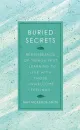
Buried Secrets: Rememberance of Things Past, a Review by Christopher Perez

reviewed by: Christopher Perez

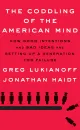
The Coddling of the American Mind, reviewed by Dylan Selterman

reviewed by: Dylan Selterman

My Year of Rest and Relaxation, reviewed by Andrew Archer

reviewed by: Andrew Archer

The Hope Circuit, Reviewed by Joe Smith

reviewed by: Joe Smith

Social Psychology: Revisiting the Classics (2nd Edition)

reviewed by: Richard Skaff

Most Read

  • Magazine Issue 01/2018

    Cooperation in social dilemmas: How can psychology help to meet climate change goals?

    written by: Rachel New, Julian Savulescu, Nadira S. Faber
  • Magazine Issue 08/2014

    Revisiting the past can make the present a better place: The psychological and social benefits of nostalgia

    written by: Clay Routledge
  • Magazine Issue 10/2007

    There’s Something About Zero

    written by: Clare Jonas
  • Magazine Issue 01/2012

    Honor in the Past: The Case of Mexico

    written by: Sonya Lipsett-Rivera
  • Magazine Issue 01/2025

    From moderate to radical - will failure change the climate movement? Psychological studies on the impact of success and failure on social movements

    written by: Johanna Kranz, Astrid Carrapatoso, Martin Schwichow

The Inquisitive Mind Magazine is supported by:

  • DGPs
  • C-SEB

Menu

  • The Magazine
  • Blog
  • Book Reviews
  • The Foundation
  • Donate
  • facebook
  • twitter
  • instagram
  • print

About Us

In-Mind is a voluntary science communication project. We enable scientifically working psychologists to present their research topics in a scientifically sound, understandable and entertaining way for an interested audience: Psychology by scientists for everyone....more

Footer menu

  • Imprint
  • Data Protection
Clear keys input element