  • INT
  • DE
  • FR
  • IT
  • NL

User account menu

  • Log in
Home
  • The Magazine
    • All Issues
    • Glossary
    • For Authors
    • Magazine Staff
  • Blog
    • All Blog Posts
    • For Authors
  • Book Reviews
    • Book Reviews
  • The Foundation
    • What is In-Mind?
    • Credits
  • Donate

Psychology for You!

  • Magazine Issue
    02/2026

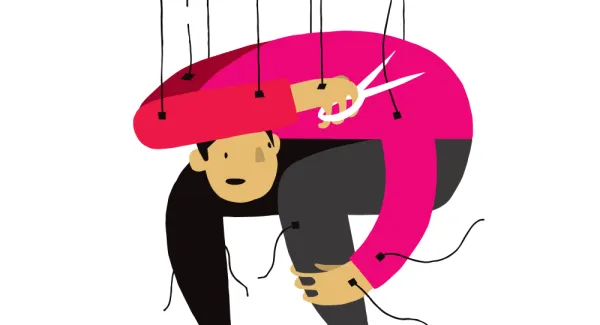
    A spoonful of misinformation helps the medicine go viral. How misinformation spreads and who bears the consequences.

    • written by
    • Lotte Slootmaekers,
    • Sanne Houben,
    • Irena Boskovic
    Back to January 2021: you are at home because of the COVID-19 pandemic and decide to scroll through social media for some much-needed distraction. Within seconds, you come across posts about microchips in vaccines, COVID spreading through 5G networks, and President Trump suggesting that injecting disinfectants could be a cure for COVID-19. Social media has become a hotbed of armchair experts, doom-mongers, and conspiracy theorists. You laugh off the misinformation easily, after all, nobody really believes this... Right?
    read more
    • Log in to post comments
  • Magazine Issue
    02/2026

    A step-by-step guide to writing science communication articles

    • written by
    • Maike Ramrath,
    • Stella Wernicke
    Effective science communication bridges the gap between science and society. This guide outlines practical strategies for turning psychological research into engaging, accessible articles, including topic selection, structuring the article, and responsible presentation of results.
    read more
    • Log in to post comments
  • Magazine Issue
    02/2026

    When loving hurts: The pervasiveness of stigma towards consensual non-monogamy

    • written by
    • Stefano Ciaffoni,
    • Yasin Koc,
    • Silvia Moscatelli
    Consensual non-monogamy is often seen as immoral, childish, or even harmful. This article reviews how stigma towards consensually non-monogamous relationships is widespread and socially shared, shaping judgments and discrimination against those who love outside monogamous norms.
    read more
    • Log in to post comments
  • Magazine Issue
    02/2026

    Scrolling through the past: How digital tools change the way we remember

    • written by
    • Kate Schramm,
    • Fabian Hutmacher
    We are constantly documenting our lives with digital technologies. But how do these tools, from smartphone camera rolls to wearables and social media platforms, change what and how we remember? In this article, we explore the interplay between memories stored in our minds and the available technological devices.
    read more
    • Log in to post comments

  • Magazine Issue 02/2026

    A spoonful of misinformation helps the medicine go viral. How misinformation spreads and who bears the consequences.

    written by: Lotte Slootmaekers, Sanne Houben, Irena Boskovic
  • Magazine Issue 02/2026

    A step-by-step guide to writing science communication articles

    written by: Maike Ramrath, Stella Wernicke
  • Magazine Issue 02/2026

    When loving hurts: The pervasiveness of stigma towards consensual non-monogamy

    written by: Stefano Ciaffoni, Yasin Koc, Silvia Moscatelli
  • Magazine Issue 02/2026

    Scrolling through the past: How digital tools change the way we remember

    written by: Kate Schramm, Fabian Hutmacher
  • Magazine Issue 05/2018

    White lies and black lies: What they have in common and how they differ

    written by: Janina Steinmetz, Ann-Christin Posten
    Black lies, or telling a lie to gain a personal benefit, are universally condemned. In contrast, white lies, or telling a lie to please another person, are seen as an... more
  • Magazine Issue 04/2018

    Fake Posttraumatic Stress Disorder (PTSD) Costs Real Money

    written by: Irena Boskovic, Harald Merckelbach
    As a diagnosis, Posttraumatic stress disorder ( PTSD ) rests entirely on what people report about their symptoms. Thus, many people, such as Robert, Lisa, and even a Senator, who... more
  • Magazine Issue 04/2018

    Bad day? How it can seem even worse for some

    written by: Michelle Lemay, Brittney Holcomb
    Many people do not realize how often our emotions affect us. Our emotions dictate what things we focus on or attend to, how we interpret things, and what things we... more
  • Magazine Issue 04/2018

    Improving the Disclosure of Information in an Investigative Interview: Rapport building and the Physical Environment

    written by: Katherine Hoogesteyn, Ewout Meijer, Aldert Vrij, Harald Merckelbach
    When you think about an interrogation room, what do you picture? A small, dull, and anxiety -provoking room? You may be right; some interrogation rooms look like this. However, does... more
  • Magazine Issue 01/2018

    Welcome to the Matrix! Opportunities and Risks of the Virtual World

    written by: Sarah Mayr

    It's been almost 20 years since Neo, "The One", booted up to fight the machines in the global smash hit The Matrix. Once painted as a dark and foreboding frontier... more
  • Magazine Issue 01/2018

    Cooperation in social dilemmas: How can psychology help to meet climate change goals?

    written by: Rachel New, Julian Savulescu, Nadira S. Faber
    Effectively managing shared natural resources is essential to protecting and improving our physical environment. This cannot be done without cooperation at international, national and local levels. Bringing together research on... more
  • Load More Issues

In-Mind Blog

  • 05.05.2014 | Culture

    Can music create intercultural understanding? According to Madonna (and psychological research), it can!

    written by:
    In my last blog, I argued that Madonna’s lyric of ‘music makes the people come together’ has a scientific basis. There are scientific studies that support the claim that music indeed increases cooperation and, thus, brings people together. But, as you might remember, the second line in the chorus of Madonna’s song is: ‘Music mix the bourgeoisie and the rebel’. In this blog, I will discuss whether she is citing the literature correctly or not. more
  • 02.05.2014 | Solid Science

    Pre-registration watch part 1: Detecting deception

    written by: Anna van 't Veer
    In this blog post, I will report on the experiences of social psychologists, such as myself, with committing ourselves to detailed descriptions of the hypotheses and other specifics of experiments... more
  • 28.04.2014 | Meaning Making

    Free will without metaphysics

    written by: Andrew Monroe
    Free will is big news these days. It is turning up in the New York Times, NPR, Slate, car commercials, and in two excellent 2009 pieces in this very blog... more
  • 25.04.2014 | Happiness & Well-being

    Where are the genes for psychological traits?

    written by: Marcus Munafo
    In this blog post, I will discuss the methodologies available for identifying genetic influences on psychological traits, why it has proved so difficult to reliably identify specific genes, despite 20... more
  • 21.04.2014 | Gender

    Marrying smart or marrying instead of being smart? The goal conflict between MRS degrees and STEM degrees

    written by: Cathleen Clerkin
    In this blog post, I review a number of studies that suggest that telling women to focus on their MRS degree (aka getting married) while in college can make women... more
  • 18.04.2014 | Violence & Aggression

    Sticks and stones and breaking bones: Social psychology and school aggression

    written by: Sian Jones
    Throughout the years in which aggression in schools has been researched, one interesting finding has been replicated many times over. That is, that when you ask children ‘what do you... more
  • Load more blog posts

Book Reviews

Buried Secrets: Rememberance of Things Past, a Review by Christopher Perez

reviewed by: Christopher Perez

The Coddling of the American Mind, reviewed by Dylan Selterman

reviewed by: Dylan Selterman

My Year of Rest and Relaxation, reviewed by Andrew Archer

reviewed by: Andrew Archer

The Hope Circuit, Reviewed by Joe Smith

reviewed by: Joe Smith

Social Psychology: Revisiting the Classics (2nd Edition)

reviewed by: Richard Skaff

Most Read

  • Magazine Issue 01/2018

    Cooperation in social dilemmas: How can psychology help to meet climate change goals?

    written by: Rachel New, Julian Savulescu, Nadira S. Faber
  • Magazine Issue 08/2014

    Revisiting the past can make the present a better place: The psychological and social benefits of nostalgia

    written by: Clay Routledge
  • Magazine Issue 10/2007

    There’s Something About Zero

    written by: Clare Jonas
  • Magazine Issue 01/2012

    Honor in the Past: The Case of Mexico

    written by: Sonya Lipsett-Rivera
  • Magazine Issue 01/2025

    From moderate to radical - will failure change the climate movement? Psychological studies on the impact of success and failure on social movements

    written by: Johanna Kranz, Astrid Carrapatoso, Martin Schwichow

The Inquisitive Mind Magazine is supported by:

  • DGPs
  • C-SEB

Menu

  • The Magazine
  • Blog
  • Book Reviews
  • The Foundation
  • Donate
  • facebook
  • twitter
  • instagram
  • print

About Us

In-Mind is a voluntary science communication project. We enable scientifically working psychologists to present their research topics in a scientifically sound, understandable and entertaining way for an interested audience: Psychology by scientists for everyone....more

Footer menu

  • Imprint
  • Data Protection
Clear keys input element