  • INT
  • DE
  • FR
  • IT
  • NL

User account menu

  • Log in
Home
  • The Magazine
    • All Issues
    • Glossary
    • For Authors
    • Magazine Staff
  • Blog
    • All Blog Posts
    • For Authors
  • Book Reviews
    • Book Reviews
  • The Foundation
    • What is In-Mind?
    • Credits
  • Donate

Psychology for You!

  • Magazine Issue
    02/2026

    A spoonful of misinformation helps the medicine go viral. How misinformation spreads and who bears the consequences.

    • written by
    • Lotte Slootmaekers,
    • Sanne Houben,
    • Irena Boskovic
    Back to January 2021: you are at home because of the COVID-19 pandemic and decide to scroll through social media for some much-needed distraction. Within seconds, you come across posts about microchips in vaccines, COVID spreading through 5G networks, and President Trump suggesting that injecting disinfectants could be a cure for COVID-19. Social media has become a hotbed of armchair experts, doom-mongers, and conspiracy theorists. You laugh off the misinformation easily, after all, nobody really believes this... Right?
    read more
    • Log in to post comments

  • Magazine Issue
    02/2026

    A step-by-step guide to writing science communication articles

    • written by
    • Maike Ramrath,
    • Stella Wernicke
    Effective science communication bridges the gap between science and society. This guide outlines practical strategies for turning psychological research into engaging, accessible articles, including topic selection, structuring the article, and responsible presentation of results.
    read more
    • Log in to post comments

  • Magazine Issue
    02/2026

    When loving hurts: The pervasiveness of stigma towards consensual non-monogamy

    • written by
    • Stefano Ciaffoni,
    • Yasin Koc,
    • Silvia Moscatelli
    Consensual non-monogamy is often seen as immoral, childish, or even harmful. This article reviews how stigma towards consensually non-monogamous relationships is widespread and socially shared, shaping judgments and discrimination against those who love outside monogamous norms.
    read more
    • Log in to post comments

  • Magazine Issue
    02/2026

    Scrolling through the past: How digital tools change the way we remember

    • written by
    • Kate Schramm,
    • Fabian Hutmacher
    We are constantly documenting our lives with digital technologies. But how do these tools, from smartphone camera rolls to wearables and social media platforms, change what and how we remember? In this article, we explore the interplay between memories stored in our minds and the available technological devices.
    read more
    • Log in to post comments

  • Magazine Issue 02/2026

    A spoonful of misinformation helps the medicine go viral. How misinformation spreads and who bears the consequences.

    written by: Lotte Slootmaekers, Sanne Houben, Irena Boskovic
  • Magazine Issue 02/2026

    A step-by-step guide to writing science communication articles

    written by: Maike Ramrath, Stella Wernicke
  • Magazine Issue 02/2026

    When loving hurts: The pervasiveness of stigma towards consensual non-monogamy

    written by: Stefano Ciaffoni, Yasin Koc, Silvia Moscatelli
  • Magazine Issue 02/2026

    Scrolling through the past: How digital tools change the way we remember

    written by: Kate Schramm, Fabian Hutmacher
  • Magazine Issue 01/2018

    Selfie-Esteem: The Relationship Between Body Dissatisfaction and Social Media in Adolescent and Young Women

    written by: Bindal Makwana, Yaeeun Lee, Susannah Parkin, Leland Farmer
    Social media platforms like Instagram and Facebook have become ingrained in the lives of countless individuals. With adolescents and young adults, particularly young women, being the primary users of such... more
  • Magazine Issue 07/2017

    The Face of Leadership: How CEOs’ Facial Appearance Predicts Business Success

    written by: Daniel E. Re, Nicholas O. Rule
    Recent research in social psychology has demonstrated that the facial appearance of Chief Executive Officers (CEOs) and other business leaders predicts their companies’ financial performance. In this article, we review... more
  • Magazine Issue 07/2017

    Straight talk about gaydar: How do individuals guess others’ sexual orientation?

    written by: Fabio Fasoli, Peter Hegarty
    Individuals guess women’s and men’s sexual orientation on the basis of visual, non-verbal, and vocal cues. People use these cues as signs of others’ sexual orientation . Here, we review... more
  • Magazine Issue 03/2017

    In Defense of Anger: An Evolutionary Necessity and its Contemporary Applicability

    written by: Cameron Stuart Kay
    Anger is defined as an unpleasant feeling that results from an unpleasant event and it is, therefore, not particularly surprising that so many people dismiss it as a pointless emotion... more
  • Magazine Issue 03/2017

    Asking Children to Talk About Abuse: Can Research Help Improve Police Interviewer Skills?

    written by: Mikaela Magnusson, Emelie Ernberg, Sara Landström
    Child abuse cases often lack corroborative evidence in the form of injuries, DNA or direct witness observations. Instead, the most important source of information about the alleged crime is typically... more
  • Magazine Issue 03/2017

    Sleepy Politics: How Sleep Deprivation can Affect Political Decision Making

    written by: Jan Alexander Häusser
    In today’s political landscape, important decisions are often made by those who are severely sleep deprived. This raises the question of potential consequences of sleep deprivation for political decision making... more
  • Load More Issues

In-Mind Blog

  • 14.04.2014 | Solid Science

    The year the journals changed

    written by: Roger Giner-Sorolla
    Where do all the studies come from? Behind every headline trumpeting a new finding in psychology, you can usually find an article in a peer-reviewed psychology journal. But how reliable... more
  • 09.04.2014 | Culture

    Colorful Culture

    written by: Charis Eisen, Keiko Ishii
      As a world without colors would be extremely boring, we are luckily able to perceive various different colors that enrich our environment. Recently, Keiko Ishii and colleagues found that... more
  • 31.03.2014 | Announcements and News

    Inequality: Minority disadvantage or White privilege? - And why it matters

    written by: Ellie Shockley
    Around the world, some groups are privileged. For instance, in the Netherlands, the Surinamese, Moluccans, Antilleans, Turks, and Moroccans are considered disadvantaged. In the United States, African Americans, Native Americans... more
  • 28.03.2014 | Political Psychology

    Bleeding-heart liberals and hard-hearted conservatives: Political dehumanization in the United States

    written by: Jarret Crawford
    My previous blog post covered new research showing that liberals and conservatives are prejudiced against one another to an equal degree. In this post, I will review evidence that liberals’... more
  • 24.03.2014 | Culture

    Why Madonna was right: Music really does make the people come together

    written by: Marieke van Egmond
    In August 2000, global superstar Madonna released the single “Music” from her soon to be hit album. Other than the brilliant lyrics “Do you like to Boogie woogie”, you might... more
  • 21.03.2014 | Interdisciplinary Inquiries, Current Events, Political Psychology

    Is banning bossy enough to enact real social change? Celebrity activism and the “Ban Bossy” campaign

    written by: Jessica Tomory
    Recently celebrity activists such as Beyoncé, Jennifer Garner, and Sheryl Sandberg have thrown their weight behind a campaign to ban the term “bossy” to describe women (banbossy.com, #banbossy). The goal... more
  • Load more blog posts

Book Reviews

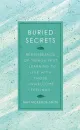
Buried Secrets: Rememberance of Things Past, a Review by Christopher Perez

reviewed by: Christopher Perez

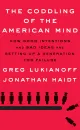
The Coddling of the American Mind, reviewed by Dylan Selterman

reviewed by: Dylan Selterman

My Year of Rest and Relaxation, reviewed by Andrew Archer

reviewed by: Andrew Archer

The Hope Circuit, Reviewed by Joe Smith

reviewed by: Joe Smith

Social Psychology: Revisiting the Classics (2nd Edition)

reviewed by: Richard Skaff

Most Read

  • Magazine Issue 01/2018

    Cooperation in social dilemmas: How can psychology help to meet climate change goals?

    written by: Rachel New, Julian Savulescu, Nadira S. Faber
  • Magazine Issue 08/2014

    Revisiting the past can make the present a better place: The psychological and social benefits of nostalgia

    written by: Clay Routledge
  • Magazine Issue 10/2007

    There’s Something About Zero

    written by: Clare Jonas
  • Magazine Issue 01/2012

    Honor in the Past: The Case of Mexico

    written by: Sonya Lipsett-Rivera
  • Magazine Issue 01/2025

    From moderate to radical - will failure change the climate movement? Psychological studies on the impact of success and failure on social movements

    written by: Johanna Kranz, Astrid Carrapatoso, Martin Schwichow

The Inquisitive Mind Magazine is supported by:

  • DGPs
  • C-SEB

Menu

  • The Magazine
  • Blog
  • Book Reviews
  • The Foundation
  • Donate
  • facebook
  • twitter
  • instagram
  • print

About Us

In-Mind is a voluntary science communication project. We enable scientifically working psychologists to present their research topics in a scientifically sound, understandable and entertaining way for an interested audience: Psychology by scientists for everyone....more

Footer menu

  • Imprint
  • Data Protection
Clear keys input element