  • INT
  • DE
  • FR
  • IT
  • NL

User account menu

  • Log in
Home
  • The Magazine
    • All Issues
    • Glossary
    • For Authors
    • Magazine Staff
  • Blog
    • All Blog Posts
    • For Authors
  • Book Reviews
    • Book Reviews
  • The Foundation
    • What is In-Mind?
    • Credits
  • Donate

Psychology for You!

  • Magazine Issue
    02/2026

    A spoonful of misinformation helps the medicine go viral. How misinformation spreads and who bears the consequences.

    • written by
    • Lotte Slootmaekers,
    • Sanne Houben,
    • Irena Boskovic
    Back to January 2021: you are at home because of the COVID-19 pandemic and decide to scroll through social media for some much-needed distraction. Within seconds, you come across posts about microchips in vaccines, COVID spreading through 5G networks, and President Trump suggesting that injecting disinfectants could be a cure for COVID-19. Social media has become a hotbed of armchair experts, doom-mongers, and conspiracy theorists. You laugh off the misinformation easily, after all, nobody really believes this... Right?
    read more
    • Log in to post comments

  • Magazine Issue
    02/2026

    A step-by-step guide to writing science communication articles

    • written by
    • Maike Ramrath,
    • Stella Wernicke
    Effective science communication bridges the gap between science and society. This guide outlines practical strategies for turning psychological research into engaging, accessible articles, including topic selection, structuring the article, and responsible presentation of results.
    read more
    • Log in to post comments

  • Magazine Issue
    02/2026

    When loving hurts: The pervasiveness of stigma towards consensual non-monogamy

    • written by
    • Stefano Ciaffoni,
    • Yasin Koc,
    • Silvia Moscatelli
    Consensual non-monogamy is often seen as immoral, childish, or even harmful. This article reviews how stigma towards consensually non-monogamous relationships is widespread and socially shared, shaping judgments and discrimination against those who love outside monogamous norms.
    read more
    • Log in to post comments

  • Magazine Issue
    02/2026

    Scrolling through the past: How digital tools change the way we remember

    • written by
    • Kate Schramm,
    • Fabian Hutmacher
    We are constantly documenting our lives with digital technologies. But how do these tools, from smartphone camera rolls to wearables and social media platforms, change what and how we remember? In this article, we explore the interplay between memories stored in our minds and the available technological devices.
    read more
    • Log in to post comments

  • Magazine Issue 02/2026

    A spoonful of misinformation helps the medicine go viral. How misinformation spreads and who bears the consequences.

    written by: Lotte Slootmaekers, Sanne Houben, Irena Boskovic
  • Magazine Issue 02/2026

    A step-by-step guide to writing science communication articles

    written by: Maike Ramrath, Stella Wernicke
  • Magazine Issue 02/2026

    When loving hurts: The pervasiveness of stigma towards consensual non-monogamy

    written by: Stefano Ciaffoni, Yasin Koc, Silvia Moscatelli
  • Magazine Issue 02/2026

    Scrolling through the past: How digital tools change the way we remember

    written by: Kate Schramm, Fabian Hutmacher
  • Magazine Issue 02/2021

    When I get that boring feeling: Sex as escape from boredom

    written by: Andrew Moynihan
    Everyone gets bored from time to time. What do you do when you have these everyday feelings of boredom? In some cases, psychologists found that during such bouts, people sometimes... more
  • Magazine Issue 02/2021

    A primer on porn and relationships

    written by: Dan Miller, Gert Martin Hald
    The ease of access to pornography via the Internet has sparked a renewed interest in the effects of porn on consumers, with much of the public debate on the topic... more
  • Magazine Issue 02/2021

    The sex tips you won’t see in magazines: Science-backed ways to stay sexually satisfied in long-term relationships

    written by: Jessica Maxwell
    Women should insert jade eggs into their vaginas to increase the chance of orgasm (1) . Don’t believe in sexual soulmates (2) . For a happier life, have sex once... more
  • Magazine Issue 11/2020

    How "The Good Place" illustrates an unorthodox theory in moral psychology

    written by: Alan Jern
    On The Good Place, people are judged on the morality of virtually everything they do. This might seem unfair, but what really counts as moral and non-moral? Evidence from psychology... more
  • Magazine Issue 11/2020

    How The Good Place illustrates an unorthodox theory in moral psychology

    written by:
    On The Good Place, people are judged on the morality of virtually everything they do. This might seem unfair, but what really counts as moral and non-moral? Evidence from psychology... more
  • Magazine Issue 01/2020

    Are you Instagram-official? - Love, social media, and their impact on each other

    written by: Lili Fejes-Vékássy, Adrienn Ujhelyi
    Have you ever thought about the criteria used for being recognized as an official couple on social media ? Maybe you felt annoyed when your partner’s new profile picture had... more
  • Load More Issues

In-Mind Blog

  • 15.11.2014 | Social Influence & Negotiations

    Is social psychology ready for the big science revolution?

    written by: Frank Bosco
    In this blog post, I will describe perhaps the greatest challenge facing social psychology (and other social sciences) in the coming decades: The curation and increased accessibility of research findings... more
  • 13.11.2014 | Meaning Making

    Hot or cold morality? (Part 1)

    written by: Andrew Monroe
    How do we make moral judgments?  Are people cold, calculating Vulcans? Or are they affectively hot hedonists? Researchers often present morality as a war between vying ‘hot’ and ‘cold’ processes... more
  • 12.11.2014 | Culture

    Sorry, the relationship with your mother still matters for your achievement in life

    written by: Marieke van Egmond
    Parents in societies around the world have big ambitions for their children. At the same time, those societies have become more competitive. In order to become a successful lawyer, you... more
  • 31.10.2014 | Political Psychology

    Never give up: The persistence of misinformation effects

    written by: Alina Feinholdt
    Politicians, corporations, journalists and even scientists sometimes do it – they tell people things that later on turn out to be incorrect. Yet, getting rid of this so-called misinformation is... more
  • 26.10.2014 | Race & Ethnicity, Self-Control & Decision-Making

    Does discrimination fit a prototype?

    written by: Aaron Moss
    In this blog post, I discuss what information people use to decide whether a behavior constitutes discrimination. Similar to the way people organize categories and identify objects, I review research... more
  • 18.10.2014 | Happiness & Well-being

    The missing heritability problem

    written by: Marcus Munafo
     In my last post I described the transition from candidate gene studies to genome-wide association studies, and argued that the corresponding change in the methods used, focusing on the... more
  • Load more blog posts

Book Reviews

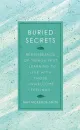
Buried Secrets: Rememberance of Things Past, a Review by Christopher Perez

reviewed by: Christopher Perez

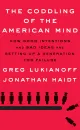
The Coddling of the American Mind, reviewed by Dylan Selterman

reviewed by: Dylan Selterman

My Year of Rest and Relaxation, reviewed by Andrew Archer

reviewed by: Andrew Archer

The Hope Circuit, Reviewed by Joe Smith

reviewed by: Joe Smith

Social Psychology: Revisiting the Classics (2nd Edition)

reviewed by: Richard Skaff

Most Read

  • Magazine Issue 03/2024

    Context matters: Why women are not worse negotiators than men

    written by: Moritz Burmester, Yannik Escher, Danna Oomen, Hannes Petrowsky
  • Magazine Issue 04/2018

    Fake Posttraumatic Stress Disorder (PTSD) Costs Real Money

    written by: Irena Boskovic, Harald Merckelbach
  • Magazine Issue 01/2015

    Children are poor witnesses. Or are they?

    written by: Nathalie Brackmann, Henry Otgaar, Melanie Sauerland, Harald Merckelbach
  • Magazine Issue 10/2007

    Exposing an Armed Criminal: What Can We Learn from Psychology and the Police?

    written by: Anastassia Blechko
  • Magazine Issue 06/2011

    General action and inaction goals: Definitions & effects

    written by: Melanie B. Tannenbaum, Justin Hepler, Dolores Albarracin

The Inquisitive Mind Magazine is supported by:

  • DGPs
  • C-SEB

Menu

  • The Magazine
  • Blog
  • Book Reviews
  • The Foundation
  • Donate
  • facebook
  • twitter
  • instagram
  • print

About Us

In-Mind is a voluntary science communication project. We enable scientifically working psychologists to present their research topics in a scientifically sound, understandable and entertaining way for an interested audience: Psychology by scientists for everyone....more

Footer menu

  • Imprint
  • Data Protection
Clear keys input element