  • INT
  • DE
  • FR
  • IT
  • NL

User account menu

  • Log in
Home
  • The Magazine
    • All Issues
    • Glossary
    • For Authors
    • Magazine Staff
  • Blog
    • All Blog Posts
    • For Authors
  • Book Reviews
    • Book Reviews
  • The Foundation
    • What is In-Mind?
    • Credits
  • Donate

Psychology for You!

  • Magazine Issue
    02/2026

    A spoonful of misinformation helps the medicine go viral. How misinformation spreads and who bears the consequences.

    • written by
    • Lotte Slootmaekers,
    • Sanne Houben,
    • Irena Boskovic
    Back to January 2021: you are at home because of the COVID-19 pandemic and decide to scroll through social media for some much-needed distraction. Within seconds, you come across posts about microchips in vaccines, COVID spreading through 5G networks, and President Trump suggesting that injecting disinfectants could be a cure for COVID-19. Social media has become a hotbed of armchair experts, doom-mongers, and conspiracy theorists. You laugh off the misinformation easily, after all, nobody really believes this... Right?
    read more
    • Log in to post comments
  • Magazine Issue
    02/2026

    A step-by-step guide to writing science communication articles

    • written by
    • Maike Ramrath,
    • Stella Wernicke
    Effective science communication bridges the gap between science and society. This guide outlines practical strategies for turning psychological research into engaging, accessible articles, including topic selection, structuring the article, and responsible presentation of results.
    read more
    • Log in to post comments

  • Magazine Issue
    02/2026

    When loving hurts: The pervasiveness of stigma towards consensual non-monogamy

    • written by
    • Stefano Ciaffoni,
    • Yasin Koc,
    • Silvia Moscatelli
    Consensual non-monogamy is often seen as immoral, childish, or even harmful. This article reviews how stigma towards consensually non-monogamous relationships is widespread and socially shared, shaping judgments and discrimination against those who love outside monogamous norms.
    read more
    • Log in to post comments

  • Magazine Issue
    02/2026

    Scrolling through the past: How digital tools change the way we remember

    • written by
    • Kate Schramm,
    • Fabian Hutmacher
    We are constantly documenting our lives with digital technologies. But how do these tools, from smartphone camera rolls to wearables and social media platforms, change what and how we remember? In this article, we explore the interplay between memories stored in our minds and the available technological devices.
    read more
    • Log in to post comments

  • Magazine Issue 02/2026

    A spoonful of misinformation helps the medicine go viral. How misinformation spreads and who bears the consequences.

    written by: Lotte Slootmaekers, Sanne Houben, Irena Boskovic
  • Magazine Issue 02/2026

    A step-by-step guide to writing science communication articles

    written by: Maike Ramrath, Stella Wernicke
  • Magazine Issue 02/2026

    When loving hurts: The pervasiveness of stigma towards consensual non-monogamy

    written by: Stefano Ciaffoni, Yasin Koc, Silvia Moscatelli
  • Magazine Issue 02/2026

    Scrolling through the past: How digital tools change the way we remember

    written by: Kate Schramm, Fabian Hutmacher
  • Magazine Issue 02/2024

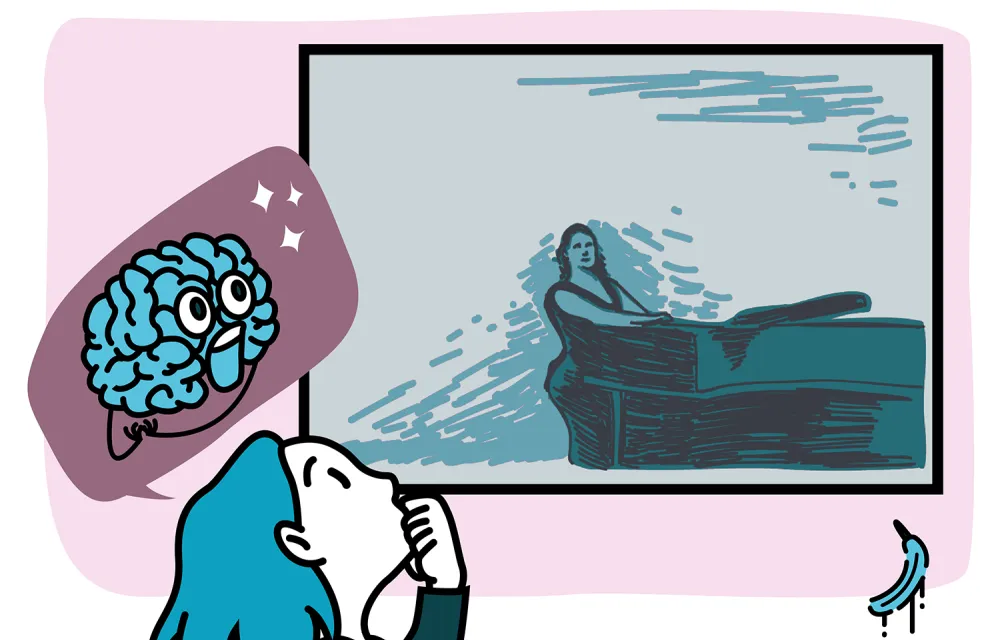
    Is there an art center in our brain? That’s bananas!

    written by: Sophie G. Elschner
    Artworks can move us deeply. But does that mean our brain treats them in a special way? We can find out by looking at how the brain processes art and... more
  • Magazine Issue 06/2023

    Learning styles: Why they don't exist but still persist

    written by: Martin Daumiller, Benedikt Wisniewski
    It is a common myth that for optimal learning, individual learning styles should be identified and specifically supported. This might include identifying someone as a visual learner and designing the... more
  • Magazine Issue 12/2021

    Are victim or eyewitness statements credible? Several ways to check them

    written by: Nurul Arbiyah, Henry Otgaar, Eric Rassin
    In 2014, two teachers and six janitors were accused of child sexual abuse at Indonesia's Jakarta International School (JIS). Three preschool children reported that they had been repeatedly sexually abused... more
  • Magazine Issue 05/2021

    How much does the menstrual cycle affect emotional life?

    written by: Maria Gröndal
    Around 1.6 billion women of fertile age currently have an ongoing menstrual cycle, and a larger group of women will experience or have already experienced this. Everyone probably knows a... more
  • Magazine Issue 05/2021

    From derogation to reclamation: How does language change?

    written by: Samuel Sturaro, Fabio Fasoli
    Derogatory labels are offensive words that can be reclaimed by a stigmatized group; however, the process of reclaiming can carry risks.
    In 2020, Black Lives Matter (BLM) protests took place... more
  • Magazine Issue 02/2021

    Nuances of sexual consent: Who? What? When? Where? Why? How?

    written by: Malachi Willis
    People keep talking about sexual consent, but what is it? Let’s dive into some recent research and discover that there is more to sexual consent than you might think. Sexual... more
  • Load More Issues

In-Mind Blog

  • 23.02.2015 | Culture

    Einstein beats Mother Theresa as the hero of the world

    written by: Marieke van Egmond
    Heroes and villains don’t only exist in comic books. The real world is full of ‘good’ and ‘bad’ guys (and girls). Being an exceptional scientist or humanitarian will most likely... more
  • 12.02.2015 | Happiness & Well-being

    Time to unwind: When autonomy and motivation add weight to recovery

    written by: Alina Feinholdt
    Extended working hours and off-job duties leave increasingly less time for a person to recover. Thus, the more important it becomes for a person to seek activities that really help... more
  • 17.01.2015 | Current Events, Violence & Aggression

    Empowering cartoonists, deterring killers, protecting bystanders: Can psychology contribute?

    written by: Winnifred Louis
    We respond on many levels, like our readers, to the 2015 attack on Charlie Hebdo staff in France. The human tragedy makes us sad and angry. The moral atrocity screams for outraged... more
  • 16.12.2014 | Solid Science

    Solid science: How graduate students foster research transparency

    written by: Nicole Janz
    Reproducibility is seen as the gold standard for solid science. However, three are few incentive to work transparently, and even less incentives to conduct replication studies. To change this, more... more
  • 05.12.2014 | Happiness & Well-being

    Becoming superhuman: Is it all in your mind?

    written by: Mallika Sarma, Cathleen Clerkin
    Everyone loves a good comic book hero, but what if superhuman feats were something you could learn to do in real life?  In this post, we will share some recent... more
  • 02.12.2014 | Social Influence & Negotiations

    Who gives a Tweet? Fandom, social identity, and why people take to Twitter

    written by: Jessica Tomory
    When we think of the world in terms of categories and different groups of people, we think of the various groups to which we belong and our identities within such... more
  • Load more blog posts

Book Reviews

Buried Secrets: Rememberance of Things Past, a Review by Christopher Perez

reviewed by: Christopher Perez

The Coddling of the American Mind, reviewed by Dylan Selterman

reviewed by: Dylan Selterman

My Year of Rest and Relaxation, reviewed by Andrew Archer

reviewed by: Andrew Archer

The Hope Circuit, Reviewed by Joe Smith

reviewed by: Joe Smith

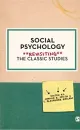
Social Psychology: Revisiting the Classics (2nd Edition)

reviewed by: Richard Skaff

Most Read

  • Magazine Issue 03/2024

    Context matters: Why women are not worse negotiators than men

    written by: Moritz Burmester, Yannik Escher, Danna Oomen, Hannes Petrowsky
  • Magazine Issue 04/2018

    Fake Posttraumatic Stress Disorder (PTSD) Costs Real Money

    written by: Irena Boskovic, Harald Merckelbach
  • Magazine Issue 01/2015

    Children are poor witnesses. Or are they?

    written by: Nathalie Brackmann, Henry Otgaar, Melanie Sauerland, Harald Merckelbach
  • Magazine Issue 10/2007

    Exposing an Armed Criminal: What Can We Learn from Psychology and the Police?

    written by: Anastassia Blechko
  • Magazine Issue 06/2011

    General action and inaction goals: Definitions & effects

    written by: Melanie B. Tannenbaum, Justin Hepler, Dolores Albarracin

The Inquisitive Mind Magazine is supported by:

  • DGPs
  • C-SEB

Menu

  • The Magazine
  • Blog
  • Book Reviews
  • The Foundation
  • Donate
  • facebook
  • twitter
  • instagram
  • print

About Us

In-Mind is a voluntary science communication project. We enable scientifically working psychologists to present their research topics in a scientifically sound, understandable and entertaining way for an interested audience: Psychology by scientists for everyone....more

Footer menu

  • Imprint
  • Data Protection
Clear keys input element